


Pakistan Mobile Phone Taxes Under Review as Senate Pushes for Tax Relief
Pakistan’s mobile phone taxation system is once again facing scrutiny as lawmakers call for lower taxes and a more transparent mechanism for determining the value and taxation of imported smartphones.
The issue has become increasingly important as high handset prices continue to affect smartphone affordability, digital access, and the adoption of newer technologies in Pakistan.
Lawmakers Call for Lower Mobile Phone Taxes
A Senate committee has called for an immediate reduction in taxes imposed on imported mobile phones and asked authorities to develop a clearer mechanism for determining mobile phone valuations and applicable taxes.
The committee discussed the issue of mobile phone pricing and taxation with officials from relevant government departments. Lawmakers argued that excessive taxation can make smartphones more expensive for consumers and create additional pressure on businesses.
The committee also questioned whether mobile phones should be subject to such a heavy tax burden in the first place.
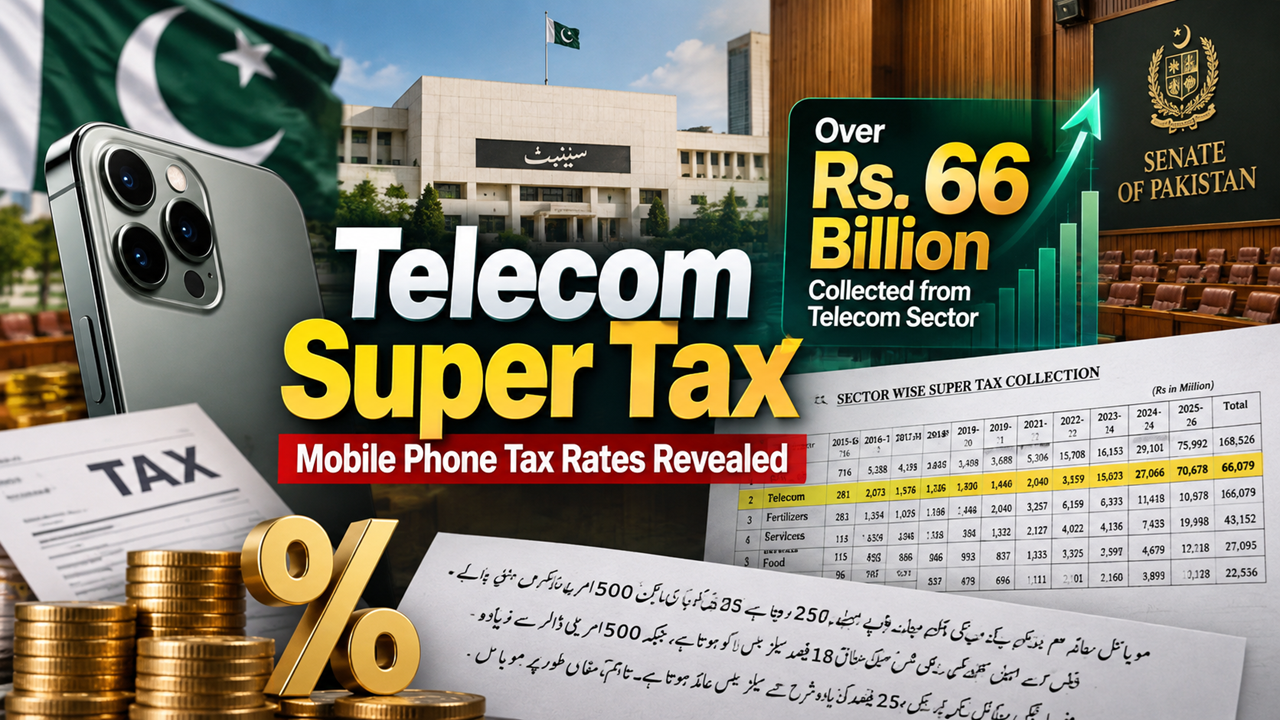
FBR Responsible for Mobile Phone Taxes
One important point highlighted during discussions is that mobile phone taxes are determined and collected under the federal taxation system rather than by the Pakistan Telecommunication Authority (PTA).
The Federal Board of Revenue (FBR) is responsible for the taxation framework, while customs authorities play a key role in determining the valuation of imported devices.
The Senate committee asked the relevant authorities to provide further information about the existing taxation structure and valuation mechanism.
High Taxes Continue to Affect Smartphone Prices
Pakistan has traditionally imposed multiple taxes and duties on imported smartphones. Depending on the device category and value, consumers can face a combination of sales tax, income tax, customs duties, regulatory duties and other applicable charges.
Earlier parliamentary discussions highlighted the significant tax burden on imported smartphones, particularly expensive devices. Officials told a National Assembly committee that imported handsets could face an effective tax burden of around 54%, while locally manufactured or assembled phones generally face a lower burden.
The National Assembly’s Standing Committee on Finance also called for a review of the existing taxation structure to improve affordability and encourage local mobile phone manufacturing.
Sales Tax on Mobile Phones Also Under Discussion
Sales tax remains another major part of the broader mobile phone taxation debate.
Government officials previously briefed lawmakers about sales tax rates applicable to mobile phones, with rates varying according to the value and classification of the device. The parliamentary committee called for the overall taxation framework to be reviewed rather than relying on a single tax reduction.
The debate is particularly significant because smartphones are no longer considered luxury products by many consumers. Mobile phones are now essential for online education, digital payments, banking, e-commerce, communication, employment and access to government services.
Impact on Consumers and the Telecom Industry
A reduction in mobile phone taxes could potentially lower the final retail price of imported smartphones if the savings are passed through the supply chain.
Cheaper smartphones could also encourage more consumers to upgrade older devices and gain access to faster mobile networks and modern applications.
The telecom industry has also repeatedly argued that a lower tax burden could support investment and digital adoption. Industry representatives have called for broader tax reforms to improve affordability and encourage investment in Pakistan’s digital infrastructure.
Local Manufacturing Could Benefit
Pakistan has significantly expanded local smartphone assembly and manufacturing in recent years. Lower taxes on components and a more predictable taxation structure could help local manufacturers increase production and potentially offer more affordable devices.
The government has also been promoting local manufacturing as part of its broader strategy to reduce reliance on imported smartphones.
However, policymakers still face the challenge of balancing government revenue requirements with the need to make smartphones affordable for consumers.
What Could Happen Next?
The latest discussions do not automatically mean that mobile phone taxes have been reduced.
Any major change to the taxation structure would require the relevant government authorities and Parliament to approve the necessary policy or legislative measures.
For consumers, the key question remains whether future tax reforms will result in noticeably lower smartphone prices.
Pakistan has already introduced some duty reductions during the 2026-27 fiscal year, while the government has also indicated that further handset tax changes are not currently under consideration.
The continued debate in Parliament and the Senate nevertheless shows that mobile phone affordability remains an important policy issue. Any future reduction in taxes could have a direct impact on smartphone prices, digital inclusion and the adoption of newer technologies across Pakistan.
Conclusion
Pakistan’s mobile phone tax system is under increasing scrutiny as lawmakers push for lower taxes and greater transparency in the valuation of imported devices.
While the Senate and parliamentary committees have called for reforms, consumers should not assume that an immediate tax cut has been approved. The final impact on smartphone prices will depend on decisions by the federal government, FBR and Parliament.
For now, the mobile phone tax debate is expected to remain an important issue as Pakistan works to expand digital connectivity and prepare consumers for newer technologies such as 5G.
Leave a comment
Your email address will not be published. Required fields are marked *