

Red Dead Redemption’s Shocking Ending: Why Rockstar Decided to Kill John Marston
Rockstar Games' Red Dead Redemption remains one of the most memorable story-driven video games ever released, thanks in large part to its emotional ending. More than a decade after the original game's launch, its shocking conclusion continues to spark discussions among players.
Now, former Rockstar writer and co-founder Dan Houser has reflected on the difficult decision to kill protagonist John Marston. According to Houser, the development team understood the emotional impact of the idea, but turning it into a playable open-world experience created several technical and storytelling challenges.
The decision ultimately shaped the game's legacy, although Rockstar was surprised by how strongly some players reacted.
Why Rockstar Decided to Kill John Marston
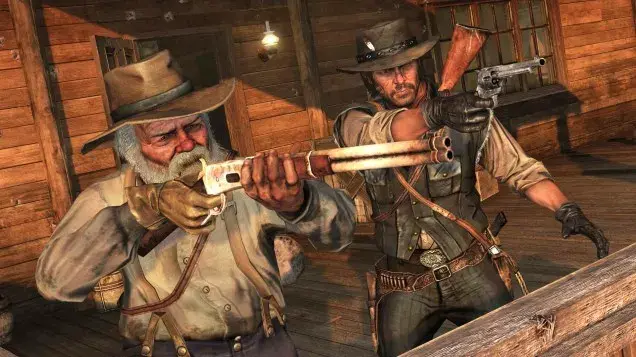
Throughout Red Dead Redemption, players follow John Marston, a former outlaw trying to leave his criminal past behind and reunite with his family. The government forces him to hunt down former gang members, promising that completing the mission will allow him to live peacefully with his wife and son.
However, the apparent happy ending does not last.
After John returns to his ranch, government forces surround the property. Knowing that escape is unlikely, he sends his family to safety and confronts the attackers. The resulting ambush ends with John's death, delivering one of gaming's most unforgettable twists.
Houser explained that the idea emerged during discussions with lead designer Christian Cantamessa. Both were interested in giving the story a tragic conclusion, but they also had to consider what would happen to the open world after the protagonist died.
The developers eventually decided that John's death was necessary to give the narrative greater emotional weight.
The Technical Challenge of Killing the Main Character
Killing a protagonist in a traditional linear game can be relatively straightforward. An open-world game presents a different problem because players often expect to continue exploring, completing side missions, and discovering hidden activities after finishing the main storyline.
If John died at the end, Rockstar needed another playable character to let players continue their adventures.
The team considered transferring control to John's son, Jack Marston. However, this required more than simply changing the character model. The developers had to consider mission progression, dialogue, unfinished side quests, and how the game world would respond to a different protagonist.
A player might complete part of a multi-stage mission as John and return later to finish it as Jack. Rockstar needed to ensure that these situations would work properly.
According to Houser, the team eventually determined that the transition was possible, although the idea initially caused considerable concern during development.
How Jack Marston Became Playable
Following John's death, the story moves forward to 1914, allowing players to control an older Jack Marston.
This transition gives players an opportunity to experience the consequences of John's sacrifice while bringing the main story to a conclusion. Jack eventually confronts Edgar Ross, the government agent responsible for pursuing his father, and kills him in a final duel.
Although the encounter offers a sense of revenge, it also carries a darker message. Jack's decision suggests that the violence that shaped his father's life has continued into the next generation.
Rather than delivering a completely happy ending, Rockstar leaves players with a complicated conclusion about revenge, family, and the difficulty of escaping the past.
Rockstar Was Surprised by Players' Anger
According to Houser, the development team was surprised by the intensity of the negative reactions after the game was released.
Some players were furious that John Marston, the character they had controlled throughout much of the adventure, could not survive the ending. After investing dozens of hours in his journey, players had developed a strong emotional connection with him.
Houser suggested that these reactions also demonstrated how deeply players had connected with the character and story.
Video games create a different relationship between audiences and fictional characters because players actively participate in their journeys. When a major character dies, the experience can feel more personal than simply watching a similar event in a film.
For Rockstar, the controversy demonstrated the emotional power of the decision, even if the reaction was stronger than the team had anticipated.
Red Dead Redemption 2 Followed a Similar Approach
Rockstar later explored another tragic protagonist's journey in Red Dead Redemption 2, which follows Arthur Morgan and the decline of the Van der Linde gang.
Arthur's story also ends in tragedy, with the precise circumstances depending partly on the player's honor level and choices during the final chapter. The game's epilogue then shifts the focus to John Marston, connecting Arthur's sacrifice with the events of the original game.
Both titles use their endings to explore the consequences of violence, loyalty, and the desire for redemption.
Their stories demonstrate Rockstar's willingness to take narrative risks rather than guarantee a happy ending for every main character.
Why John Marston's Ending Still Matters
John Marston's death remains significant because it challenges the expectations players often have of open-world games. Instead of allowing the protagonist to ride into the sunset, Rockstar makes the consequences of his past central to the conclusion.
The transition to Jack also solves a practical gameplay problem while reinforcing the story's themes. Players can continue exploring the world, but they must do so through a character whose future has been shaped by the tragedy that came before.
The result is an ending that remains memorable because it combines storytelling ambition with a meaningful change in gameplay.
Final Thoughts
Dan Houser's reflections offer insight into why Rockstar chose such a controversial conclusion for Red Dead Redemption. The decision to kill John Marston created technical challenges, required a new playable character, and risked upsetting players who had become attached to the outlaw.
Ultimately, the developers believed the tragedy gave the story the emotional weight it needed. Jack's final confrontation with Edgar Ross provided closure while showing that revenge does not necessarily bring freedom from the past.
More than a decade later, the ending remains an example of how video games can use player involvement to create powerful emotional experiences.
Follow Gadgets.com.pk for more gaming news, Rockstar Games updates, reviews, and stories from the world of technology.
Leave a comment
Your email address will not be published. Required fields are marked *