

Why Game Developers Avoid Calling Their Games “Immersive Sims”
The term “immersive sim” is familiar to dedicated PC gaming fans, particularly those who enjoy games such as Deus Ex, Dishonored, Thief and Gloomwood. However, developers behind these games increasingly believe that the genre label may not be useful when it comes to selling games to a wider audience.
For hardcore fans, an immersive sim describes games that give players multiple ways to approach problems. Players might sneak through vents, manipulate objects, use environmental tricks, fight enemies directly or combine different abilities to create unexpected solutions.
But outside that community, the term can be confusing.
New Blood Interactive Says “Immersive Sim” Is a Poor Marketing Term
Dave Oshry, CEO of New Blood Interactive, believes “immersive sim” is particularly difficult to use as a marketing label.
New Blood is known for retro-inspired shooters including Dusk and Ultrakill, but the studio has also spent years developing immersive-sim-style games such as Gloomwood and Fallen Aces.
Oshry has explained that he was already a fan of games such as Thief and Deus Ex long before he became familiar with the term “immersive sim.”
He originally viewed Thief primarily as a stealth game, while Deus Ex made more sense to him as a combination of a first-person shooter and RPG.
That experience illustrates one of the biggest problems with the label: players may understand the gameplay without necessarily knowing the genre terminology.
“Immersive Sim” Can Be Confusing for New Players
According to Oshry, the phrase can immediately create confusion among people who have never encountered it before.
Someone who sees “immersive sim” may assume the game is a simulation title rather than an action or role-playing game built around player freedom.
For experienced fans, however, the term communicates a very specific type of gameplay.
An immersive sim usually emphasizes interconnected systems, experimentation and player choice. Instead of giving players only one solution to a problem, these games often allow them to combine weapons, abilities, objects and environmental elements.
That design philosophy can be difficult to explain in a short advertisement.
RPG May Be a Better Marketing Label
Oshry argues that some games commonly associated with immersive-sim design could simply be marketed as RPGs.
He points to Baldur's Gate 3 as an example. Although Larian Studios does not primarily market the game as an immersive sim, its systems allow players to manipulate objects, combine abilities and find creative solutions to situations.
From a design perspective, those characteristics overlap with what immersive-sim fans expect.
The difference is that “RPG” is already widely understood by consumers.
Players generally know what they are getting when a game is described as a role-playing game, while the same cannot necessarily be said about “immersive sim.”
Prey Demonstrated the Marketing Problem
The issue is not new.
Arkane Studios, one of the developers most closely associated with immersive-sim design, faced similar difficulties when promoting Prey.
The game offered a large number of systems and player-driven solutions, but explaining the immersive-sim concept to potential customers required additional effort.
Arkane founder Raphael Colantonio has previously argued that the term is familiar to a relatively small group of dedicated players.
That creates an unusual marketing situation. People who already understand immersive sims are often actively searching for games in the genre, while newcomers may not understand what the label means.
As a result, developers can spend considerable time explaining the genre instead of explaining why their particular game is worth playing.
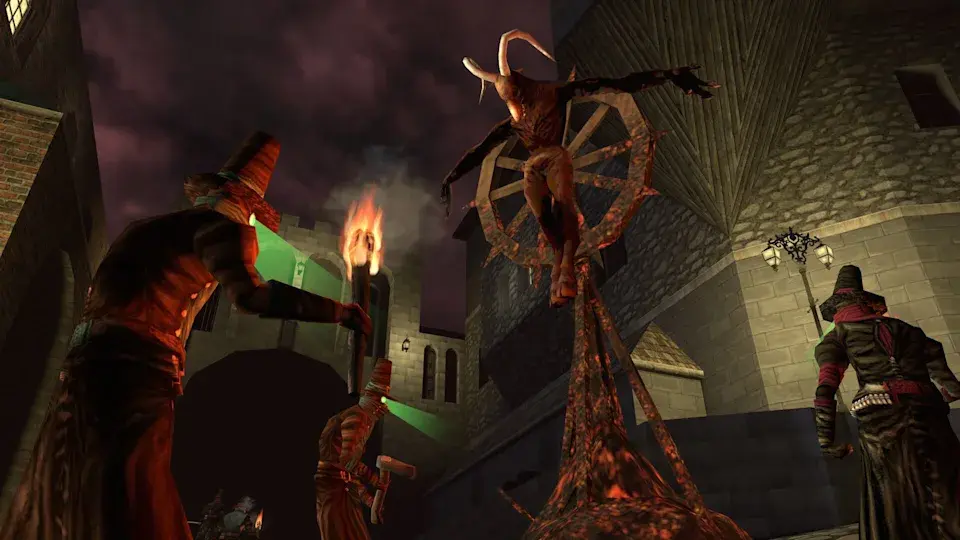
Gloomwood Was Marketed as “Thief With Guns”
New Blood Interactive encountered the problem directly while promoting Gloomwood.
Oshry initially described the game as “Thief with guns.”
The phrase immediately communicated the basic idea to fans familiar with Looking Glass Studios' classic stealth series.
However, it also created expectations that Gloomwood would closely reproduce everything players loved about Thief.
In reality, Gloomwood draws inspiration from several games and genres, including survival horror and other atmospheric first-person experiences.
The simple marketing description therefore helped attract an audience while simultaneously creating assumptions about what the finished game should be.
“Boomer Shooter” Has Been Easier to Sell
Interestingly, New Blood has had more success using another genre term: “boomer shooter.”
The phrase refers to modern games inspired by classic first-person shooters such as Doom and Quake.
Although the term can also confuse people unfamiliar with gaming terminology, it has become recognizable enough that many players immediately understand the type of game being described.
That makes it more useful from a marketing perspective.
New Blood has embraced the label across much of its catalog, and the company has found that players understand the reference quickly.

New Blood Calls Its Games a “Stealth Trilogy”
The studio has taken a similar approach with Gloomwood, Fallen Aces and Blood West.
Rather than presenting the three titles as an “immersive sim trilogy,” New Blood has grouped them together as a stealth trilogy.
The reason is straightforward: “stealth” immediately communicates something about the gameplay.
Potential players can understand the concept without needing a detailed explanation of immersive-sim design philosophy.
For fans of the genre, this may seem like an unnecessary distinction. But for developers trying to reach a larger audience, choosing a familiar genre label can make a significant difference.
The Immersive Sim Label Still Matters to Fans
Despite its marketing limitations, “immersive sim” remains valuable within the gaming community.
The term provides a convenient way for developers, critics and players to describe games built around systemic gameplay, experimentation and player freedom.
It also helps fans discover games that might otherwise be difficult to categorize.
The problem is not necessarily the genre itself. Instead, the challenge appears to be communicating its concept to people who have never played an immersive sim before.
For developers, the solution may be to market the individual features and experiences rather than relying on the genre name.
Instead of saying that a game is an immersive sim, a trailer can show players climbing through vents, manipulating the environment, combining abilities and solving problems in unexpected ways.
That approach communicates what makes the genre special without requiring audiences to understand the terminology first.
Bir yorum bırakın
E-posta adresiniz yayınlanmayacaktır. Gerekli alanlar * ile işaretlenmiştir