

Ufone, Telenor Pakistan and PTA Hold Zero Trust Cybersecurity Workshop
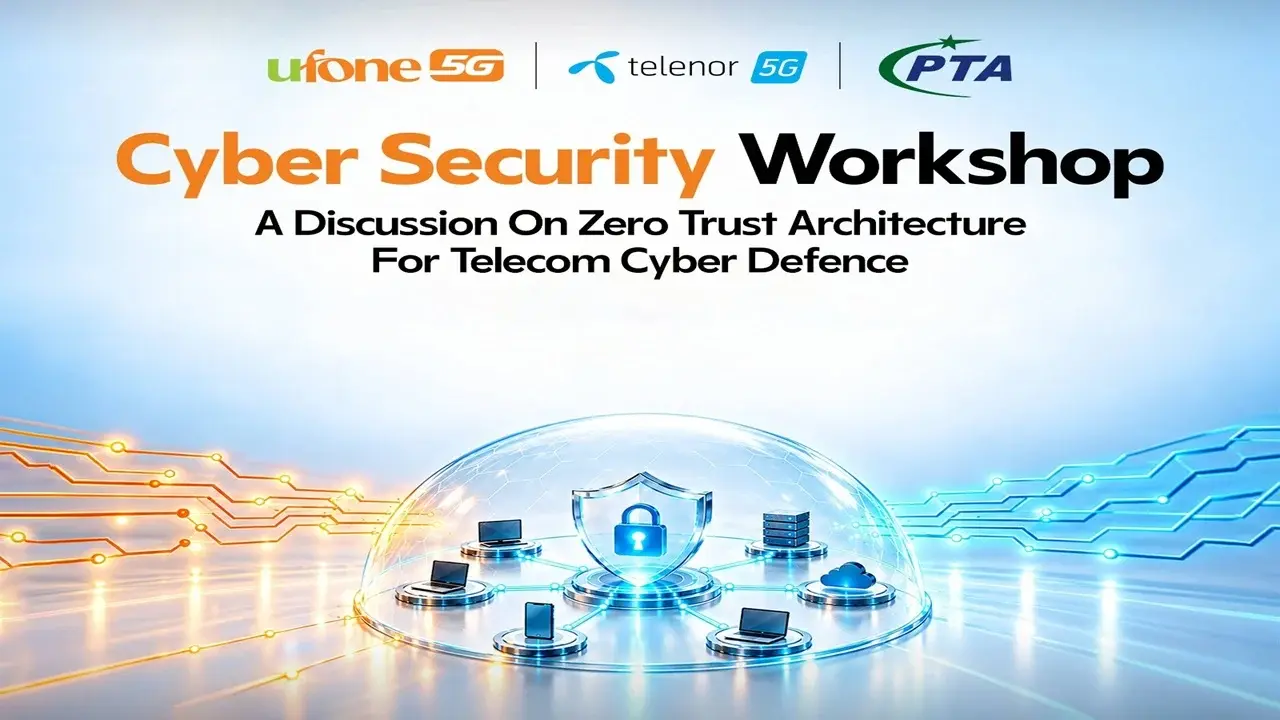
Ufone and Telenor Pakistan, in collaboration with the Pakistan Telecommunication Authority (PTA), have organized a cybersecurity workshop focused on strengthening the security and resilience of Pakistan's increasingly connected telecom infrastructure.
The executive knowledge-sharing session, titled “Zero Trust in a Hyperconnected Telecom Environment,” brought together representatives from the regulator, telecom industry, cybersecurity sector, academia and related technical fields.
The workshop focused on the growing cybersecurity challenges facing modern telecom networks and explored how the Zero Trust security model can help organizations better protect users, systems, services and critical infrastructure.
Why Zero Trust Matters for Telecom Networks
Traditional cybersecurity strategies have often relied heavily on protecting the perimeter of an organization's network. However, modern telecom environments are becoming increasingly interconnected.
Employees, customers, devices, cloud services, applications, vendors and third-party systems can all interact with telecom infrastructure. This expanding ecosystem creates additional security challenges and potential entry points for cyber threats.
The Zero Trust approach takes a different position: access should not automatically be trusted simply because a user or device is already inside a network.
Instead, organizations continuously verify access, enforce appropriate security controls and closely manage permissions.
For telecom operators handling critical infrastructure and large volumes of customer data, these principles can play an important role in improving security.
Ufone and Telenor Pakistan Share Cybersecurity Expertise
The workshop also highlighted the cybersecurity capabilities of the Ufone and Telenor Pakistan team.
Technical sessions explored evolving threats facing telecom networks, practical approaches to Zero Trust implementation and ways organizations can maintain Zero Trust as an ongoing security strategy rather than treating it as a one-time project.
This is particularly important because cybersecurity threats continue to evolve. A security system that works against today's threats may require regular updates as attackers adopt new techniques and technologies.
The event therefore emphasized continuous monitoring, access verification and adaptation as important parts of a modern cybersecurity strategy.
PTA Highlights Importance of Industry Collaboration
The workshop included opening remarks from Mukarram Khan, Director General Cyber Vigilance at PTA, followed by technical discussions and knowledge-sharing sessions.
The involvement of the telecom regulator reflects the importance of cooperation between government authorities and private-sector operators when dealing with cybersecurity risks.
Telecom networks are critical to Pakistan's digital economy. Mobile connectivity supports communication, financial services, online businesses, government services and a growing number of digital applications.
A major disruption or successful cyberattack against critical telecom infrastructure could therefore have consequences beyond the telecom sector itself.
Access Governance Is a Key Part of Zero Trust
One of the major themes discussed during the workshop was access governance.
Zero Trust security requires organizations to carefully determine who or what can access specific resources and under which circumstances.
This can include verifying users and devices, limiting privileges and managing privileged accounts more carefully.
Restricting access to only what is required can reduce the potential impact of compromised credentials or unauthorized access.
For telecom operators, this becomes particularly important because networks involve numerous systems, employees, vendors and technical platforms that may require different levels of access.
Managing Privileged Access
Privileged accounts can provide extensive control over systems and infrastructure, making them an important area of cybersecurity management.
The workshop emphasized stronger approaches to privileged access management as part of the wider Zero Trust model.
Instead of providing broad and permanent access, organizations can implement tighter controls and verification processes around sensitive systems.
This can help reduce the risks associated with compromised administrative accounts and unauthorized activity.
Zero Trust Is an Ongoing Security Journey
A key message from the workshop was that Zero Trust should not be considered a single product or a one-time technology deployment.
Instead, it is an ongoing security journey involving continuous verification, appropriate controls and regular adaptation.
As networks change, organizations introduce new technologies and cyber threats evolve, security policies must also be reviewed and updated.
This approach can help telecom companies maintain stronger security practices over the long term.
Interactive Sessions Encourage Knowledge Sharing
Following the technical presentations, participants took part in a question-and-answer session where they could exchange perspectives and discuss practical cybersecurity challenges.
An interactive knowledge quiz was also held as part of the workshop.
Such sessions can help bring technical professionals and industry stakeholders together to share experiences and develop a better understanding of emerging threats.
The event also featured keynote insights from industry and security expert Tauseef Aslam, along with participation from other cybersecurity professionals and industry leaders.
Pakistan's Telecom Sector Faces Growing Security Challenges
Pakistan's telecom infrastructure is becoming increasingly important as more services move online and consumers depend on mobile connectivity for everyday activities.
The growth of 5G, cloud services, artificial intelligence, eSIM technology and digital financial services can create new opportunities while also introducing additional security considerations.
The PTA has previously taken steps to strengthen telecom cybersecurity, including the establishment of the National Telecom Security Operations Center (NTSOC) to improve threat intelligence, incident management and coordinated security response across the telecom sector.
More recently, the telecom sector has also been discussing security requirements around next-generation networks and emerging technologies.
Building a More Resilient Telecom Ecosystem
Ufone and Telenor Pakistan said the initiative reinforces their commitment to secure and resilient telecom services and constructive engagement with the regulator and wider industry.
The broader goal is to encourage stronger security practices across the telecom ecosystem rather than relying on individual organizations working independently.
Cybersecurity threats can move across interconnected systems and supply chains, making collaboration and information sharing increasingly important.
By bringing operators, regulators, security experts and other stakeholders together, workshops such as this can help develop greater awareness and encourage organizations to adopt stronger security practices.
Final Thoughts
The Ufone, Telenor Pakistan and PTA Zero Trust cybersecurity workshop highlights the growing importance of cybersecurity in Pakistan's telecom industry.
As telecom networks become more interconnected, traditional perimeter-based security approaches may not be sufficient on their own. Zero Trust provides a framework centered around continuous verification, stronger access governance and appropriate security controls.
The initiative also demonstrates the importance of collaboration between telecom operators, regulators and cybersecurity professionals.
For Pakistan's increasingly digital economy, building secure and resilient telecom infrastructure will remain an important priority as 5G, AI, cloud services and other technologies continue to expand.
Tinggalkan komentar
Alamat email Anda tidak akan dipublikasikan. Kolom yang wajib diisi ditandai *