


5 Best Foldable Phones to Consider Instead of iPhone Duo in 2026
Apple has finally entered the foldable smartphone market with the iPhone Duo, but buyers looking for a folding phone have plenty of alternatives in 2026.
The iPhone Duo uses a passport-style design, with a 5.4-inch outer display that opens into a 7.6-inch OLED screen. It starts at around $2,000, putting it firmly in the premium foldable category. While Apple's first foldable has received positive early impressions, Android manufacturers have already spent years refining folding-phone designs.
That makes the Android market worth exploring before spending nearly $2,000 on Apple's first-generation foldable.
Here are five alternatives that stand out in 2026.
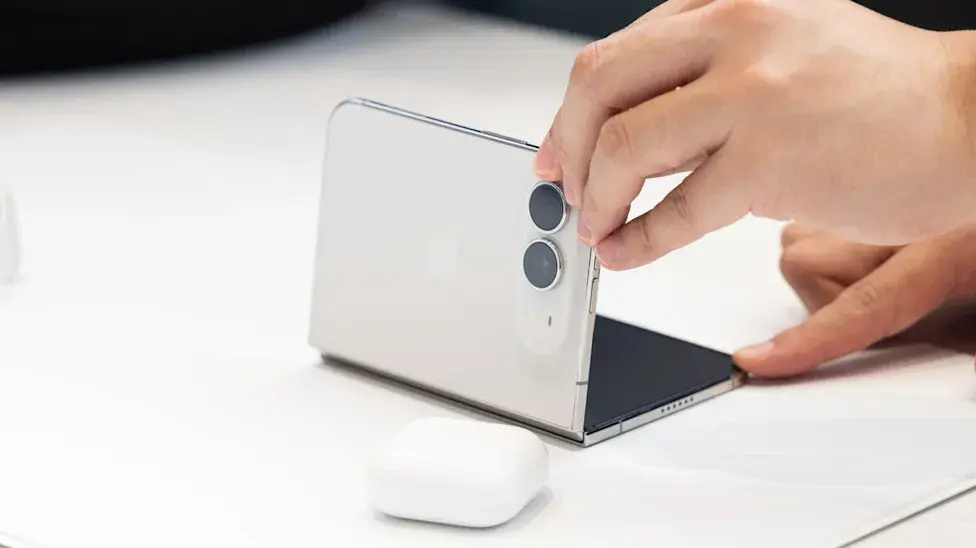
1. Samsung Galaxy Z Fold 8
Samsung remains one of the most experienced companies in the foldable-phone market, and the Galaxy Z Fold 8 is one of the closest alternatives to Apple's iPhone Duo.
The Fold 8 has a wider design than some previous Galaxy Fold models. Its 5.5-inch cover display opens into a 7.6-inch inner screen, giving users a large canvas for multitasking, video and productivity.
Both displays use Dynamic LTPO AMOLED 2X technology and support refresh rates of up to 120Hz.
Samsung has also worked on reducing the visibility of the display crease while improving the device's overall durability. The phone uses the Snapdragon 8 Elite Gen 5 processor and comes with Samsung's long-term software support commitment.
Why consider the Galaxy Z Fold 8?
The biggest advantage is productivity.
Samsung's One UI software provides extensive multitasking features, making it possible to run multiple applications and arrange them across the large internal display.
The phone also starts at about $1,900 for 256GB, making it slightly cheaper than the iPhone Duo at the entry level.
For Android users who want a premium book-style foldable, the Fold 8 is one of the most direct alternatives to Apple's device.
2. Google Pixel 11 Pro Fold
Google's Pixel 11 Pro Fold takes a different approach by combining a large folding display with Google's software and AI features.
The phone has a 6.5-inch cover screen and an 8-inch internal display. Both panels use OLED technology and support refresh rates of up to 120Hz.
Google has also made the phone slimmer and lighter compared with its previous-generation foldable. It features an IP68 rating and a glass-fiber composite rear panel designed to improve durability.
Google's software is the main attraction
The Pixel 11 Pro Fold runs Android 17 with Google's Pixel interface.
AI features powered by Gemini are integrated throughout the software experience. Some features are more useful than others, but Google's approach makes the Pixel particularly interesting for users who prioritize software and AI tools.
The phone starts around $1,900, putting it in the same general price range as the Galaxy Z Fold 8 and iPhone Duo.
3. Samsung Galaxy Z Flip 8
Not everyone needs a foldable that opens into a mini tablet.
For shoppers who want a phone that becomes smaller rather than larger when folded, the Galaxy Z Flip 8 is a compelling option.
The clamshell-style phone starts at around $1,200 for the 256GB model, making it substantially cheaper than the iPhone Duo and other premium book-style foldables.
Its outer display surrounds the dual-camera system and can be used for notifications, music controls and other quick interactions. Samsung has also expanded what users can do from the cover screen compared with earlier models.
Inside, the phone has a 120Hz AMOLED display and uses the Snapdragon 8 Elite Gen 5 processor with 12GB of RAM.
Who should buy the Galaxy Z Flip 8?
The Flip 8 makes more sense for people who want the novelty and convenience of a foldable without spending close to $2,000.
It also folds into a compact shape that can be easier to carry in a pocket.
The trade-off is that its camera system isn't designed to compete with the best traditional flagship smartphones, particularly when it comes to advanced zoom photography.
4. Xiaomi 18 Fold
For shoppers willing to look beyond the most familiar U.S. smartphone brands, the Xiaomi 18 Fold offers an interesting alternative.
Its design is particularly close to the passport-style concept used by Apple's iPhone Duo. The two phones even have very similar dimensions, according to the original comparison.
Xiaomi equips the 18 Fold with two 120Hz LTPO AMOLED displays supporting Dolby Vision and HDR10+.
The displays can reportedly reach up to 4,000 nits of peak brightness.
Strong camera hardware
The Xiaomi 18 Fold also takes a more ambitious approach to photography.
Its rear camera setup includes a 200MP main camera, a 50MP ultrawide camera and a 50MP 3x telephoto camera.
That dedicated telephoto camera gives Xiaomi an important advantage over some competing passport-style foldables that rely on digital zoom.
The phone runs Android 17 with Xiaomi's HyperOS 4 interface and uses the company's Xring O3 processor.
The availability problem
The biggest obstacle for some buyers is availability.
Xiaomi does not officially sell all of its smartphones in every market, particularly the U.S. Importing a device can also introduce carrier compatibility, warranty and software considerations.
That means the Xiaomi 18 Fold can be an attractive option on paper, but buyers should check local support before ordering one.
5. Motorola Razr (2026)
If your biggest concern is price, the Motorola Razr (2026) is one of the most interesting choices on this list.
At around $800, it costs far less than the iPhone Duo and most flagship book-style foldables.
The phone uses a clamshell design with a 3.6-inch external AMOLED display and a larger internal LTPO AMOLED panel supporting a 120Hz refresh rate.
The main screen can reach up to 3,000 nits, while the outer display supports refresh rates up to 90Hz.
A more affordable entry into foldables
Motorola uses the MediaTek Dimensity 7450X processor, along with 8GB of RAM and 256GB of starting storage.
It isn't designed to compete directly with the most powerful flagship foldables, but that's also not the point.
The Razr is aimed at people who want to experience a modern foldable without spending $1,500 or $2,000.
PCMag has described the 2026 Razr as a strong budget-friendly foldable, making it particularly interesting for first-time foldable buyers.
Which Foldable Phone Should You Buy?
The best choice depends heavily on what you want from a folding phone.
Galaxy Z Fold 8 is a strong choice for multitasking and productivity.
Pixel 11 Pro Fold makes more sense for people who prioritize Google's software and AI features.
Galaxy Z Flip 8 is better suited to buyers who want a compact clamshell phone.
Xiaomi 18 Fold stands out for its hardware and camera specifications, provided you can get it with reliable local support.
Motorola Razr (2026) is the most affordable option of the five and makes a good entry point into foldable phones.
Foldable Phones Are No Longer Just a Two-Brand Race
Apple's arrival has brought more attention to foldable smartphones, but the company is entering a market where Samsung, Google, Motorola and other manufacturers already have several generations of experience.
The iPhone Duo may be particularly attractive to people who already use Apple's ecosystem, while Android alternatives provide more variety in design, price and software.
Current foldable-phone rankings also place Samsung, Google, Motorola and Apple among the leading choices, with each device targeting a different type of buyer.
For shoppers, that competition is good news. Instead of choosing between one or two expensive foldables, buyers now have options ranging from compact $800 clamshell phones to premium devices costing around $2,000.
Final Verdict
The iPhone Duo is an important milestone for Apple, but it isn't automatically the best foldable for everyone.
Samsung's Galaxy Z Fold 8 offers strong multitasking, Google's Pixel 11 Pro Fold focuses on software and AI, the Galaxy Z Flip 8 provides a more compact design, Xiaomi's 18 Fold emphasizes hardware and cameras, and Motorola's Razr offers a much lower entry price.
Before buying any foldable, however, consider more than screen size and processor specifications. Durability, hinge reliability, repair costs, software support, camera performance and local availability can make a major difference with a device this expensive.
The best foldable is ultimately the one that fits your budget and the way you actually use your phone.
Lascia un commento
Il tuo indirizzo email non sarà pubblicato. I campi obbligatori sono contrassegnati con *