



8 Third-Generation Fighter Jets Still Flying in 2026 Despite Their Age
Modern air forces are increasingly investing in advanced fourth- and fifth-generation fighter aircraft, but some countries continue to operate military jets developed during the Cold War. These older aircraft may lack modern stealth technology and advanced electronic systems, yet they remain part of several nations' military inventories.
Third-generation fighter jets first emerged during the 1960s and introduced important improvements in speed, radar technology, maneuverability and missile capabilities. Although many have been retired by major military powers, several models continue to serve in different parts of the world.
A recent report highlights eight third-generation fighter aircraft that remain in service in 2026, demonstrating how older military technology can continue to play a role in modern air forces.
1. Mikoyan-Gurevich MiG-23 Flogger
The Soviet-designed MiG-23, known by its NATO reporting name Flogger, is one of the most recognizable third-generation fighter aircraft.
Its most distinctive feature is its variable-sweep wing design, which allows pilots to adjust wing angles according to flight conditions. The aircraft can reach speeds of approximately Mach 2.35 and was designed primarily for interception and air combat missions.
More than 5,000 MiG-23 aircraft were produced during its manufacturing history.
Although Russia retired the aircraft in 1999, several countries reportedly continue to operate different versions. These include Angola, Ethiopia, Libya, North Korea and Sudan.
Its age and maintenance requirements make it less competitive against modern fighters, but its continued presence demonstrates the long operational life of Cold War aircraft.
2. McDonnell Douglas F-4 Phantom II
The F-4 Phantom II is another legendary fighter jet developed in the United States during the Cold War.
Introduced in the early 1960s, it served with the US Air Force, Navy and Marine Corps. The aircraft became particularly famous during the Vietnam War, where it participated in numerous air combat operations.
A total of 5,195 F-4 Phantom II aircraft were produced, making it one of the most successful American supersonic military aircraft.
The United States eventually retired the Phantom from active combat service, but other countries continued operating upgraded versions.
Greece, Iran and Turkey have maintained F-4 variants in their military inventories. These aircraft demonstrate how older fighter platforms can remain useful when supported by maintenance programs and equipment upgrades.
3. Shenyang J-8 Finback
China's Shenyang J-8, known by NATO as the Finback, was developed as a high-speed interceptor to protect Chinese airspace.
The twin-engine aircraft entered service in 1980 after an extended development process. It was designed to intercept approaching aircraft at high altitude and high speed.
China later introduced the improved J-8II version, featuring redesigned air intakes, upgraded engines and improved radar capabilities.
The J-8 was an important step in China's domestic military aviation development because it represented an aircraft designed and manufactured within the country rather than simply derived from Soviet designs.
Although China has gradually moved toward more advanced fighter platforms, some J-8 variants have reportedly remained in military inventory.
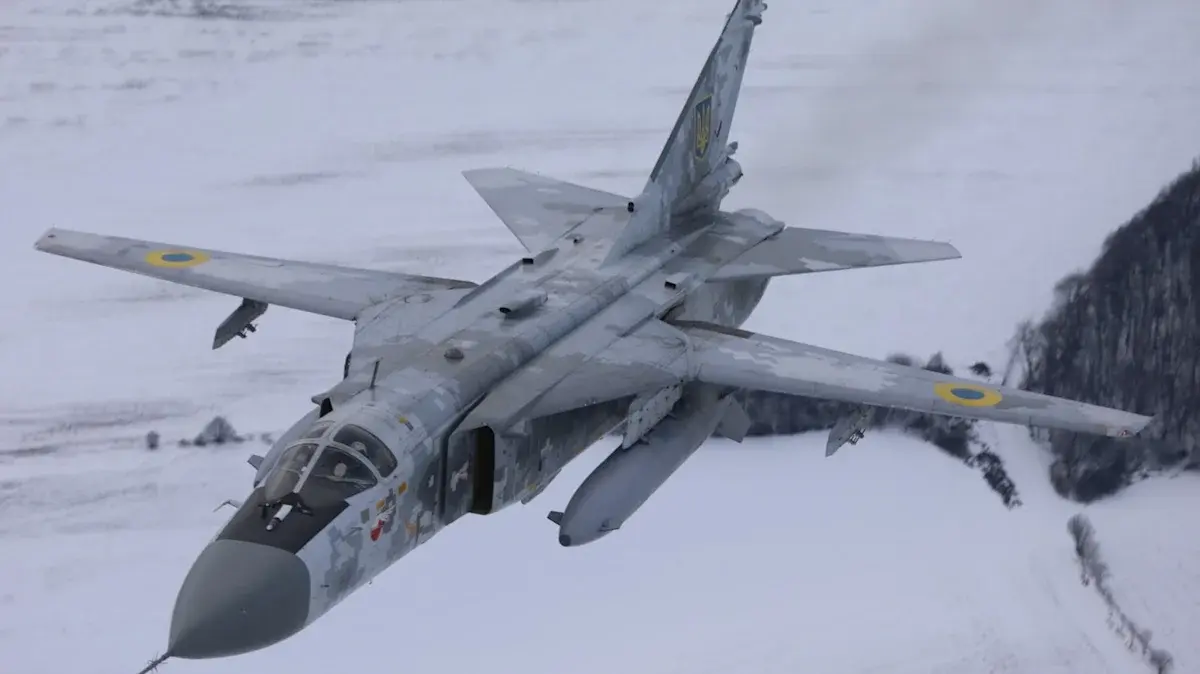
4. Sukhoi Su-24 Fencer
The Sukhoi Su-24 is a Soviet-designed aircraft developed primarily for long-range tactical strike missions.
Unlike traditional single-seat fighters, the Su-24 features two crew members sitting side by side. Its variable-sweep wings allow it to operate under different flight conditions.
The aircraft entered service in 1974 and was designed to conduct attacks against ground targets during both daytime and nighttime operations.
The Su-24 has been used in several conflicts and continues to serve with countries including Algeria, Libya, Russia, Sudan and Ukraine.
Its ability to carry different weapons and perform deep-strike missions has helped extend its operational usefulness despite its age.
5. Northrop F-5 Tiger
The Northrop F-5 Tiger is among the most widely exported lightweight supersonic fighter aircraft ever developed.
Introduced in 1964, the aircraft became popular because it was relatively affordable, compact and easier to maintain than larger fighter platforms.
More than 2,600 F-5 aircraft were manufactured across different variants.
The fighter has served in numerous countries and participated in conflicts including the Iran-Iraq War and the Ogaden War.
Several air forces continue to use upgraded F-5 models, although many are now assigned to training and aggressor roles rather than frontline combat missions.
The US Navy and Marine Corps have also used F-5 aircraft to simulate enemy fighters during military training exercises.
Why Are Third-Generation Fighter Jets Still in Service?
There are several reasons why countries continue operating older fighter aircraft.
Lower acquisition costs: Buying and maintaining older aircraft can be less expensive than purchasing modern stealth fighters.
Existing infrastructure: Air forces already operating older aircraft may have trained pilots, maintenance facilities and spare-parts arrangements.
Specialized missions: Some older fighters remain useful for interception, training and ground-attack missions.
Limited defense budgets: Not every country can afford to replace its entire military aircraft fleet with modern platforms.
However, these aircraft face significant disadvantages against modern fighters equipped with advanced radar, electronic warfare systems, precision weapons and stealth technology.
The Future of Older Military Aircraft
The continued operation of third-generation fighters highlights the economic and technological differences between military forces around the world.
While major powers are moving toward fifth-generation aircraft such as the F-35 and J-20, other countries still depend on older platforms to maintain basic air defense and combat capabilities.
Modernization programs can extend the service life of these aircraft, but eventually the cost of maintaining aging engines, electronics and structural components becomes increasingly difficult to justify.
As newer fighter technologies become more accessible, many of these Cold War aircraft are likely to disappear from operational service over the coming years.
For now, however, their continued use remains an interesting reminder of how military aviation has evolved over several decades.

Bir yorum bırakın
E-posta adresiniz yayınlanmayacaktır. Gerekli alanlar * ile işaretlenmiştir