


Visiting CNN or Zoom Could Put Your Crypto and iPhone at Risk: What Happened in Major Cyberattack?
A major cybersecurity incident has raised concerns about online safety after attackers managed to distribute malicious code through websites associated with some of the world's most recognized brands, including CNN, Zoom, BBC, HSBC, and Salesforce.
The attack, discovered on November 16, 2026, involved a compromised third-party website optimization service called Optimizely. Instead of directly hacking each company's website, attackers exploited a vulnerability in the service to inject harmful JavaScript into customer projects.
Security researcher Scott Helme and his team at Report URI identified malicious code in 188 Optimizely scripts connected to 178 organizations. The campaign was designed to steal financial information, redirect cryptocurrency transactions, collect browser data, and potentially compromise vulnerable iPhones and iPads.
Although the incident has been contained, it highlights how even trusted websites can become potential security risks when the services they rely on are compromised.
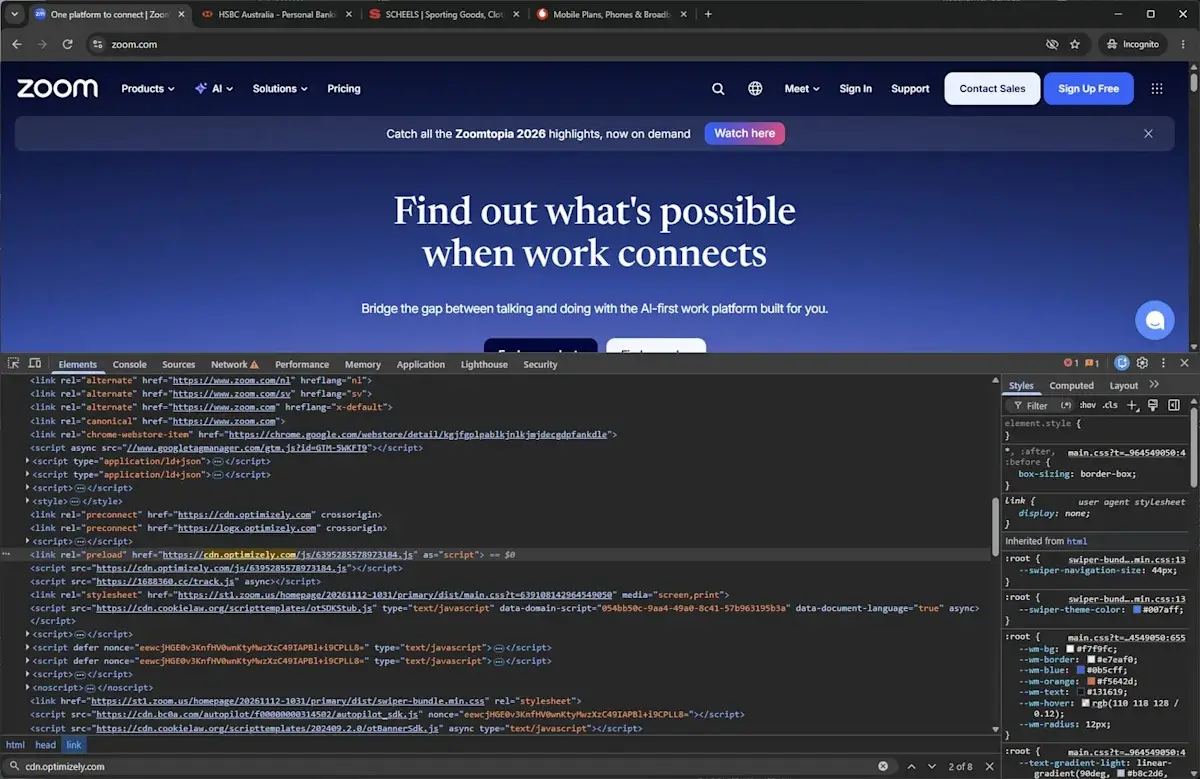
How Hackers Used Optimizely to Target 178 Organizations
Optimizely provides tools that companies use to test website designs, personalize content, and improve user experiences. Many organizations integrate its JavaScript code into their websites to run these services.
Attackers reportedly exploited a vulnerability in Optimizely's Experimentation platform, allowing them to insert malicious JavaScript into customer projects.
Because the compromised scripts continued to load from Optimizely's legitimate servers, visitors had little reason to suspect that something was wrong.
The malicious code was identified across websites associated with 178 organizations, including:
- CNN
- BBC
- Zoom
- HSBC
- Salesforce
- Equifax
- IKEA
- GitLab
Importantly, this does not mean that every listed company had its own servers hacked. The incident involved a compromised third-party service used by multiple organizations.
This type of incident is known as a software supply-chain attack, where criminals compromise a trusted technology provider to reach its customers and their users.
What Information Were Hackers Trying to Steal?
The malicious JavaScript was designed to perform several activities inside visitors' browsers. Its capabilities went beyond ordinary website tracking and included attempts to steal sensitive financial information.
1. Cryptocurrency Wallet Address Replacement
One of the most concerning parts of the attack involved cryptocurrency transactions.
The malicious script attempted to identify cryptocurrency wallet addresses displayed on webpages and replace them with addresses controlled by the attackers.
This could cause someone sending Bitcoin or another cryptocurrency to transfer funds to the wrong destination without immediately noticing the change.
Since most cryptocurrency transactions cannot easily be reversed, a successful attack could result in permanent financial losses.
2. Credit Card Information Theft
The attackers also designed the code to collect payment card information entered into website forms.
This included sensitive payment details that could potentially be used for unauthorized transactions or other financial fraud.
People who entered their card information on affected websites during the incident should carefully review their banking activity.
3. Browser Cookies and Screenshots
The malicious code also attempted to collect browser cookies and screenshots.
Cookies are small data files that websites use for purposes such as maintaining login sessions and remembering user preferences.
If attackers obtain certain session cookies, they may be able to misuse them to access accounts without knowing the original password.
Screenshots could also reveal sensitive information displayed on a webpage.
4. Attempts to Exploit iPhones and iPads
Perhaps the most concerning aspect was the attempt to target Apple devices.
The campaign reportedly attempted to load two exploit kits known as Coruna and DarkSword.
These tools were designed to exploit vulnerabilities in iOS devices and potentially compromise vulnerable iPhones and iPads simply through visiting an infected webpage.
However, there is no publicly confirmed evidence that an iPhone was successfully compromised during this particular campaign.
Which iPhone Users Were at Risk?
According to Report URI, devices running patched versions of Apple's operating systems were protected against the vulnerabilities targeted by the exploit kits.
The report identifies iOS 18.7.3 and later, as well as iOS 26.3 and later, as patched versions.
Apple users should install the latest security update available for their specific device rather than relying on an outdated software version.
To check for updates:
- Open Settings on your iPhone or iPad.
- Select General.
- Tap Software Update.
- Install an available update.
Keeping your operating system updated is one of the most effective ways to reduce the risk of known security vulnerabilities.
Optimizely Responds to the Security Incident
Optimizely acknowledged that an unauthorized party exploited a vulnerability in its Experimentation platform and used it to add malicious JavaScript to some customer projects.
The company said it had addressed the vulnerability and removed the injected code from affected projects.
Other organizations also took precautionary measures.
Salesforce reportedly disabled Optimizely scripts across its preview and production environments while investigating the incident. Equifax said it stopped using the service and found no evidence that its own systems had been compromised.
The researchers also reported that the infected scripts they were monitoring had been cleaned up.
Although the immediate threat was addressed, the incident demonstrates the importance of monitoring third-party software and securing website integrations.
What Should You Do If You Visited CNN, Zoom, or Another Affected Website?
Simply visiting an affected website does not automatically mean your device or personal information was stolen. The actual risk depends on the website, timing, device security, and whether you entered sensitive information.
If you visited one of the potentially affected websites on November 16, consider taking the following precautions.
Update your devices: Install the latest available iOS, iPadOS, Android, Windows, or browser security updates.
Review bank statements: If you entered payment card information, check recent transactions and contact your bank immediately if you notice anything suspicious.
Check cryptocurrency transactions: Review your transaction history and verify that the destination addresses match the intended recipients.
Review account activity: Check for unfamiliar login sessions or unexpected changes to your important online accounts.
Protect your passwords: If you notice suspicious account activity, change the affected passwords and enable two-factor authentication.
Sign out of important accounts: Where appropriate, terminate existing sessions and sign in again using a trusted device.
Why This Cyberattack Is a Warning for Internet Users
Modern websites depend on numerous external services, including advertising networks, analytics platforms, content delivery systems, and website optimization tools.
These services help businesses improve website performance and deliver better experiences. However, they also introduce additional security risks.
When a trusted third-party provider is compromised, malicious code can potentially reach visitors across multiple unrelated websites.
The Optimizely incident demonstrates that a website's familiar brand name does not guarantee that every component loaded by its browser is safe.
Businesses should regularly review third-party scripts, restrict unnecessary permissions, monitor changes to external code, and establish stronger security controls for integrated services.
Final Thoughts
The cyberattack involving CNN, Zoom, BBC, and other major organizations shows how attackers can exploit trusted online services to target ordinary internet users.
By compromising Optimizely's website experimentation platform, criminals attempted to steal cryptocurrency, collect payment information, capture browser data, and exploit vulnerable Apple devices.
Although Optimizely addressed the vulnerability and removed the malicious code, users should remain alert, especially if they made financial transactions through potentially affected websites on November 16.
Keeping devices updated, checking financial activity, and using strong account security practices remain essential steps for staying safe online.

Leave a comment
Your email address will not be published. Required fields are marked *